
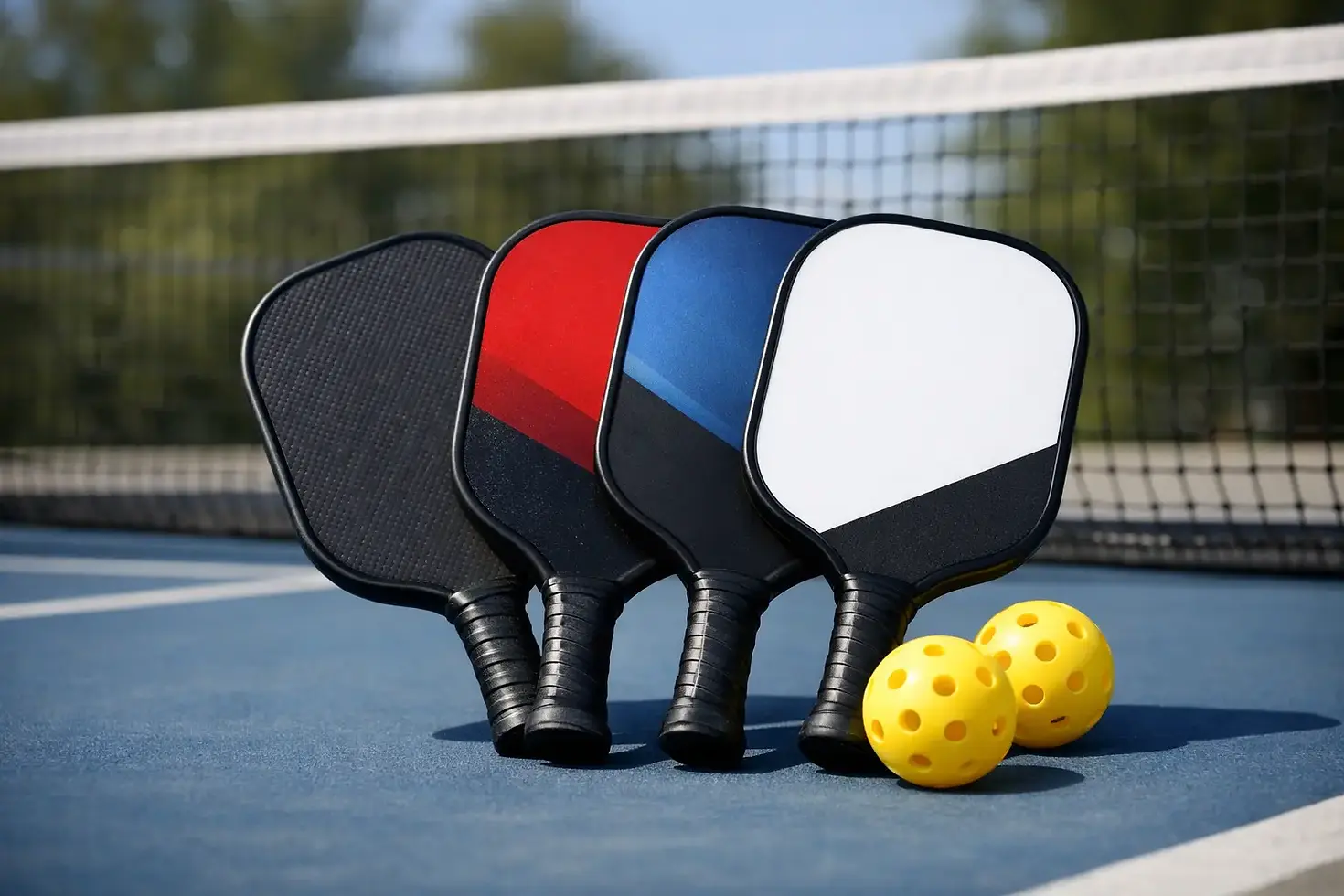
Most Popular Pro Pickleball Paddle Picks
- Unrivalled Enterprise

- Jul 2
- 6 min read
If you have ever watched a high-level match and thought, that paddle sounds different off the face, you are not imagining it. The most popular pro pickleball paddle is not just a status symbol. It usually reflects what elite players trust when the speed picks up, the hands battles get ugly, and every missed reset costs a point.
That said, there is no single magic paddle that turns anyone into a tournament threat overnight. Pros choose paddles for very specific reasons - spin generation, sweet spot stability, dwell time, hand speed, and how the paddle responds under pressure. If you want to buy smarter and play better, the real question is not just which paddle is most popular with pros. It is why.
What makes a most popular pro pickleball paddle
A paddle becomes popular at the pro level when it solves real performance problems. That sounds obvious, but it matters. Pros are not picking gear because it looks good in a bag photo. They are choosing paddles that help them attack with confidence and defend without giving up control.
The biggest reason certain paddles rise to the top is balance. A paddle with huge power but inconsistent touch usually loses favor fast. A control paddle that feels plush but gets bullied in speedups can also fall out of rotation. The most popular pro pickleball paddle tends to sit in the sweet spot between pop and precision.
Surface material plays a huge role here. Raw carbon fiber faces became a favorite because they helped players create heavier spin and a more connected feel on contact. That extra bite matters on serves, drops, rolls, and passing shots. It is not hype. Better surface texture can change how aggressively a player shapes the ball.
Core construction matters just as much. Modern thermoformed paddles, foam-injected edge walls, and upgraded honeycomb cores can widen the sweet spot and reduce flutter on off-center shots. For a pro, that means more forgiveness at full speed. For everyone else, it means fewer mishits and better confidence in fast exchanges.
Why pros do not all use the same paddle
If there were one perfect paddle, every pro would use it. That never happens because style drives paddle choice.
Power players often lean toward paddles with extra pop and a firmer response. They want to finish points, punish floaters, and win hands battles with less effort. These paddles can feel explosive, but they may ask for cleaner technique in soft-game situations.
Control-first players usually prefer a more muted feel with longer dwell time. That helps on resets, drops, and patient kitchen play. The trade-off is that put-aways may require a bigger swing or cleaner timing.
Then there are all-court players, and this is where many popular pro paddles live. They want enough power to attack, enough touch to reset, and enough spin to shape the point. These are often the paddles that appeal to the widest range of serious players because they do more than one job well.
The paddle traits pros care about most
Spin that actually changes points
Spin is not just a spec on a product page. At the pro level, spin buys margin. It lets aggressive players swing faster and still keep the ball in. It makes dipping drives harder to counter and topspin drops tougher to volley cleanly.
A textured carbon face can help, but spin is also about technique and timing. If your swing path is flat and late, the grittiest paddle on the market will not save you. Still, a paddle with strong spin potential gives skilled players more room to press an advantage.
Stability in fast hands battles
When rallies compress at the kitchen line, stability becomes a weapon. Pros want a paddle that stays solid through rapid-fire exchanges and does not twist on contact. A stable paddle makes blocks cleaner and counters more reliable.
This is one reason heavier swing-weight paddles remain popular in advanced circles. They can feel more planted through impact. The downside is that some players lose a little hand speed, especially if they are coming from a lighter setup.
Feel on resets and drops
A paddle can hit a huge drive, but if it launches every reset too high, it becomes hard to trust. Pros need touch under pressure. They need to absorb pace, soften the ball, and land it safely in the kitchen.
That is why feel matters more than most newer players realize. A paddle that gives clear feedback and predictable response often stays in the bag longer than a paddle with one flashy strength and two glaring weaknesses.
Reach and forgiveness
Elongated paddles are popular with pros because they offer extra reach and often more leverage on serves and two-handed backhands. That can be a major advantage. The trade-off is that some elongated shapes have a narrower sweet spot.
Wider-body paddles usually feel more forgiving and easier to handle for players who prioritize resets, blocks, and consistency. They may not feel as whippy or long through contact, but they can be a smarter fit depending on your game.
Should you buy the same paddle the pros use?
Sometimes yes. Sometimes absolutely not.
If you are a strong intermediate or advanced player with solid mechanics, a pro-level paddle can give you more spin, better response, and a cleaner performance ceiling. You may feel the difference right away, especially in pace control and point-ending power.
But if you are still building fundamentals, the most popular pro pickleball paddle may not be your best first move. Some high-performance paddles are less forgiving, more demanding in the soft game, or harder on the arm if the feel is too stiff. A paddle that helps you make more quality contacts is better than one that only feels great on your best swings.
That is the real buying filter. Do not ask whether a paddle is good enough for the pros. Ask whether it is good for your contact point, your timing, and your style under match pressure.
How to choose from the most popular pro pickleball paddle options
Start with your biggest on-court need. If you lose points because your drives sit up and your counters lack bite, look for a paddle with stronger pop and spin. If your issue is inconsistency in dinks, resets, and drops, lean toward control and forgiveness.
Next, think about shape. Elongated paddles reward reach and aggressive play, while hybrid and standard shapes often feel faster and more stable for all-court players. Grip length also matters if you use a two-handed backhand.
Then pay attention to feel, not just marketing terms. Some paddles feel crisp and lively. Others feel plush and connected. Neither is automatically better. The right choice depends on what helps you trust your shots when the score tightens up.
Weight is the final piece that often gets overlooked. A slightly heavier paddle can add plow-through and stability, but too much swing weight can slow your hands. A lighter setup may speed up reactions but feel less solid on blocks and counters. It depends on whether your game wins with quickness, pressure, or a blend of both.
What serious players should avoid
The biggest mistake is chasing popularity without matching fit. A paddle can dominate on tour and still be wrong for your game. That usually shows up fast in three places: too many popped-up dinks, late volleys in hand battles, or arm fatigue after long sessions.
Another mistake is focusing only on power. Power sells. Control wins a lot of long matches. If a paddle gives you fireworks for five points and chaos for the next ten, it is not helping your overall level.
It is also smart to be skeptical of hype cycles. New releases hit hard, and some deserve the attention. Others are just louder. Serious players should look past launch buzz and focus on repeatable benefits - spin, stability, comfort, forgiveness, and confidence on the shots that show up every game.
For players who want gear selected with that performance-first mindset, retailers like Pickleball "R" Us stand out because the focus stays on how equipment actually plays, not just how it looks in a promo shot.
The real takeaway on pro paddle popularity
The most popular pro pickleball paddle earns that label because it delivers under pressure. It helps skilled players shape points, survive speedups, and finish rallies with authority. But popularity alone is not the finish line. Your best paddle is the one that lets you swing harder with control, reset cleaner when stretched, and step on court knowing your gear is helping you own the rally.
Pick the paddle that matches how you play now - and where you want your game to go next.


Comments