
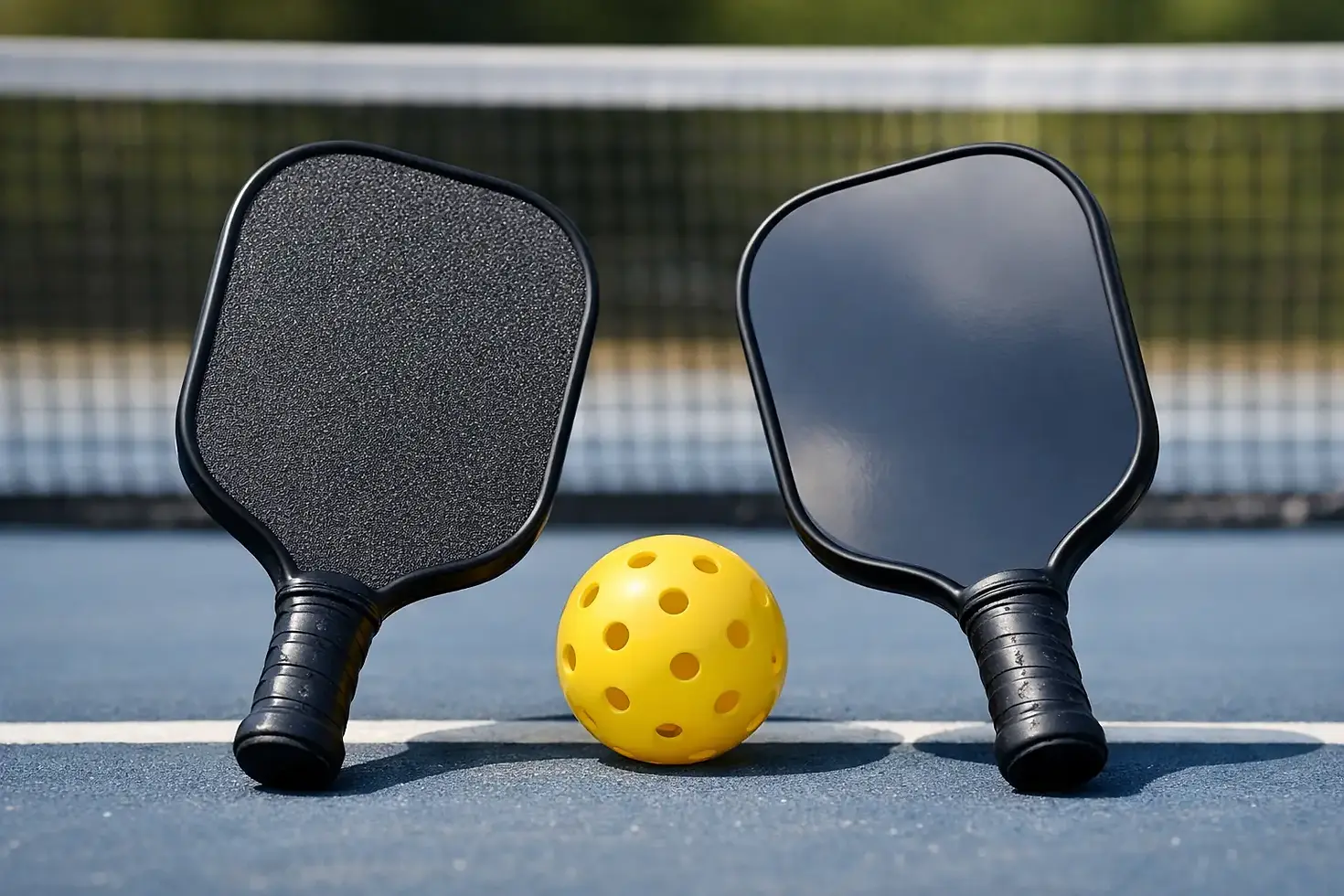
Textured Versus Smooth Paddles: Which Wins?

A paddle face can change the shape of an entire rally. Textured versus smooth paddles is not just a cosmetic choice - it affects how confidently you roll a dink, carve a return, reset a hard drive, or attack a ball above the net. The right choice is the one that supports the shots you actually hit, not the label that sounds most advanced.
A textured face can help players create more bite on the ball. A smooth face can deliver a clean, predictable response that makes simple contact feel effortless. Neither is automatically better. Your swing speed, touch, preferred pace, and willingness to maintain your equipment all matter.
Textured Versus Smooth Paddles: The Real Difference
The paddle face is the outer hitting surface. Smooth paddles have little to no raised texture you can feel with your fingers. Their spin potential usually comes from the face material, the paddle's friction characteristics, and your brushing motion through the ball.
Textured paddles use an intentionally rougher surface, a peel-ply texture, applied grit, or another engineered finish to increase friction at contact. That added friction can give the ball more rotation when you swing upward, downward, or across it. More rotation can make a topspin drive dip faster, a sliced return stay lower, and a cut dink pull away after the bounce.
The key word is potential. Texture does not manufacture technique. A player who hits flat with an open face will not suddenly produce dangerous topspin because a paddle feels gritty. But when your mechanics already include a brushing path, texture can make the result more noticeable and more repeatable.
What a Smooth Face Does Well
Smooth paddles are often a strong fit for players who want straightforward feedback. Contact can feel clean and consistent, especially on compact strokes near the kitchen line. If you are learning to control the ball, a smooth face can make it easier to understand what your hands and paddle angle are doing without chasing extra movement from the ball.
They also suit players who prefer driving through the ball. A firm, direct swing can produce pace without relying on heavy spin. That matters in fast exchanges where a quick block, punch volley, or counterattack needs a stable face and a simple response.
Do not confuse smooth with low-performance. A premium smooth or lightly finished paddle can still offer excellent control, a responsive sweet spot, and useful spin through proper contact. It simply will not emphasize surface grip to the same degree as a purpose-built textured option.
What a Textured Face Does Well
Textured faces give shot-makers more room to work. Players who use topspin serves, dipping thirds, aggressive rolls, and sharp-angle dinks often appreciate the extra ball grip. The ball stays on the face for only a fraction of a second, but that interaction can help you apply rotation with less exaggerated wrist action.
That can be valuable at the non-volley zone. A controlled topspin dink gives you a safer margin over the net and can push opponents into a more awkward contact point. On a third-shot drop, spin can help the ball fall into the kitchen rather than float deep. On a speed-up, topspin can bring an aggressive ball down before it sails long.
For competitive players, the advantage is not merely more spin. It is variety. When opponents must respect a drive that dips, a roll that jumps, and a slice that skids, their reads get harder. That is how a paddle surface becomes part of a smarter attack.
Spin Is Valuable, but Control Wins Rallies
Players often shop for texture because they want more spin. That makes sense, but spin should serve control, not replace it. A paddle that produces plenty of rotation but feels too lively on resets may cost more points than it earns. Likewise, a smooth paddle that lets you consistently place dinks, blocks, and counters can be the better weapon for your game.
Think about your most common misses. If your drives sail long, your issue may be paddle angle, swing path, or an overly powerful core rather than a lack of texture. If your drops sit up, a textured surface may help you shape the ball, but softer hands and better pace control matter just as much. Equipment should reinforce your strengths while giving your weak spots a practical path forward.
Beginners often benefit from prioritizing a forgiving sweet spot, manageable weight, and comfortable grip before making texture the main decision. Intermediate players who are building spin mechanics can gain more from texture because they are ready to use it. Advanced players may choose based on a narrow performance preference: maximum spin for heavy patterns, or a cleaner, more linear response for fast hand battles.
Durability Changes the Equation
Not all paddle textures wear the same way. Some surfaces are built into the face material. Others rely on a textured coating or applied grit. Over time, regular ball contact can reduce the roughness of certain finishes, particularly in the center of the face where you strike most often.
As texture wears, spin performance may gradually change. It rarely disappears overnight, but a paddle that once grabbed the ball aggressively can begin to feel more muted. Players who depend on heavy topspin or sharp slices should pay attention to whether their favorite shots start needing more effort.
A smooth face has less obvious texture to lose, which can make its feel seem more stable over its usable life. That does not mean every smooth paddle lasts longer. Core breakdown, edge damage, delamination, and general wear can affect any paddle. It means the surface-performance trade-off deserves an honest look before you buy.
Protect your investment. Avoid scraping the face on court surfaces, store the paddle away from extreme heat, and use a cover during travel. Clean it only according to the manufacturer's instructions. Aggressive cleaning products or abrasive tools can damage the face you chose for performance.
Feel, Power, and Texture Are Separate Decisions
Texture gets a lot of attention, but it is only one part of the paddle equation. The core thickness, face material, weight distribution, shape, and grip circumference will have a major impact on how a paddle plays.
A thick-core paddle may feel softer and more controlled at the kitchen, while a thinner core can feel quicker and more direct. An elongated shape can add reach and leverage, while a wider shape may offer a more forgiving sweet spot. A textured surface on either design will not erase those fundamental differences.
This is why two textured paddles can feel completely different. One may be plush, controlled, and built for patient construction. Another may be crisp, powerful, and designed to pressure opponents from the first drive. Choose the overall performance profile first, then decide how much surface texture supports it.
How to Choose the Right Paddle Face
Start with your playing identity. If you love creating shape, use topspin often, and want more options on serves, drops, and dinks, a textured face deserves serious consideration. It can help you turn good mechanics into more threatening ball movement.
If you value a direct feel, play plenty of quick hands battles, or are still developing consistent contact, a smooth or lightly textured face may feel more natural. You can focus on clean placement and solid fundamentals without feeling like the paddle is doing something unpredictable.
When possible, hit both styles with the same ball and on the same court. Test a soft dink, a block reset, a topspin roll, a third-shot drop, and a full drive. Do not judge after five swings. Notice which paddle helps you hit your intended target when your feet are late and the rally gets fast. That is the test that matters.
At Pickleball "R" Us, performance gear should earn its place in your bag. Whether you choose a textured face for sharper spin or a smooth face for clean consistency, select the paddle that lets you swing with purpose, trust your touch, and take command of the next ball.



Comments