

12 Pickleball Accessories That Raise Your Game

A great paddle can win you a hands battle. But when your grip slips in the third game, your balls disappear against a bright background, or your shoulder tightens before the final rally, the rest of your gear suddenly matters. The right pickleball accessories do more than fill a bag. They protect your focus, support your movement, and help your best game show up more often.
You do not need every gadget on the market. You need a performance-first setup built around how, where, and how often you play. Start with the gear that solves real problems on court, then add the pieces that make practice and match day easier.
Pickleball Accessories That Earn a Spot in Your Bag
The best accessories remove distractions. They keep your paddle secure, your eyes protected, your body ready, and your equipment organized so you can attack the next point instead of hunting for what you forgot.
1. A high-quality overgrip
Your paddle face controls the ball, but your hand controls the paddle. An overgrip gives you a more secure hold when heat, humidity, or long sessions turn a standard handle slick. It can also slightly increase grip circumference, which may help players with larger hands or anyone who wants a less cramped feel.
Look for a tacky option if you want a locked-in connection to the handle. If your hands sweat heavily, a more absorbent grip may be the better call. Neither style is automatically superior. The right choice depends on whether your biggest issue is slipping or moisture buildup.
Replace an overgrip before it gets shiny, hard, or thin. That small refresh can restore confidence on serves, resets, and quick exchanges at the kitchen line.
2. Protective eyewear
Fast hands battles are exciting until a deflected ball catches you in the face. Protective eyewear belongs in every serious player’s kit, especially for doubles, drilling, and competitive play where reaction time gets tested.
Choose lenses designed for impact protection with a secure, lightweight frame that stays put when you move. Clear lenses work well for evening sessions and indoor courts. Tinted or contrast-enhancing lenses can help outdoors, particularly when glare makes it harder to track a yellow ball against a pale sky.
Comfort matters here. If glasses pinch your temples or fog immediately, you will leave them in the bag. Find a pair that fits your face and wear it consistently.
3. Court-ready balls
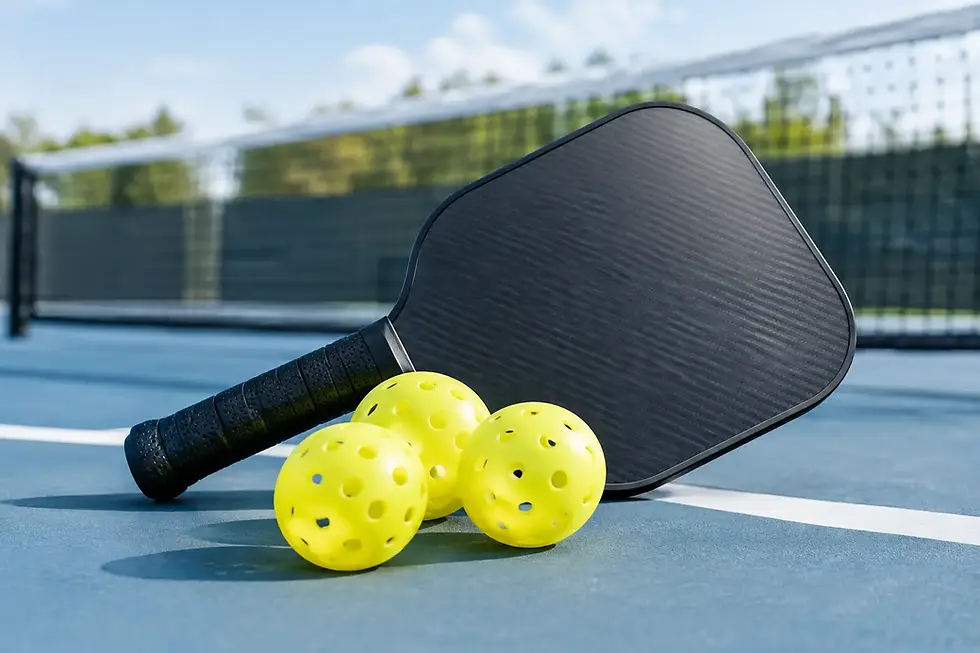
A reliable ball is not a minor detail. It affects bounce, speed, visibility, and the quality of every drill. Keeping several approved, high-visibility balls in your bag means you are ready when a game forms, a practice ball cracks, or the court’s shared supply has seen better days.
Indoor and outdoor balls are built differently. Outdoor balls typically have more holes and a firmer feel to handle wind and hard surfaces, while indoor balls often play softer and offer a different bounce. Match the ball to the court conditions instead of expecting one type to do everything.
For players working on consistency, use the same ball model during practice whenever possible. It makes feedback from your paddle and stroke easier to trust.
4. A paddle cover or protective case
Your paddle is a precision piece of equipment, not something to toss loose beside water bottles and shoes. A padded cover or structured case protects the face and edge guard from unnecessary knocks, while helping keep dirt and moisture away from the grip.
This is especially valuable if you invest in a performance paddle built for spin, control, or power. Damage can affect how a paddle feels, and heat can be hard on materials over time. Keep it covered between sessions and avoid leaving it in a hot car for hours.
A cover will not turn an aging paddle into a new one, but it is an easy way to protect the performance you paid for.
5. A bag with purpose-built storage
A basic tote gets gear from the car to the court. A well-designed pickleball bag does more. It creates a place for paddles, balls, shoes, hydration, eyewear, and the small essentials that otherwise vanish at the bottom of a bag.
Think about your normal session. If you play a quick hour after work, a compact sling may be enough. If you spend Saturday at a tournament or bring gear for the family, a larger backpack or duffel with separate compartments makes far more sense. Ventilated space for shoes or sweaty apparel is a bonus that keeps the rest of your equipment fresher.
Organization is a competitive advantage when the next match is called and you are ready to go.
6. Court shoes built for lateral movement
Running shoes are made to move forward. Pickleball asks you to stop, shuffle, pivot, lunge, and explode sideways, often in the same point. Court-specific shoes provide more lateral support and outsole durability for those demands.
This is one accessory category where value is measured in more than comfort. Stable footwear can help you move with greater confidence, protect against awkward rolls, and maintain balance when you stretch for a wide dink or chase a deep return. Choose a fit with enough room in the toe box without allowing your heel to slide.
If you play multiple times a week, watch the outsole. Once traction wears down, your movement changes. Replace shoes before they become the weak link in your footwork.
7. Sweat management essentials
A wristband, headband, towel, and spare shirt may not look glamorous, but they can keep a hot-day match from unraveling. Sweat on your hands affects grip pressure. Sweat in your eyes affects tracking. A soaked shirt can restrict movement and pull attention away from the rally.
Pack a small quick-dry towel and keep a fresh overgrip available for humid days. Performance apparel that stretches, breathes, and stays comfortable through repeated movement is part of the same equation. You want to focus on placement and pace, not fabric clinging to your back during a third-shot drop.
8. A water bottle and simple recovery fuel
Dehydration shows up fast in pickleball: slower reactions, weaker legs, rushed decisions, and sloppy mechanics. A durable insulated water bottle makes regular hydration easier, particularly during summer play or long tournament blocks.
For extended sessions, bring an electrolyte option and a snack with carbohydrates and protein. You do not need a complicated sports nutrition plan for every rec game. But if you are playing for several hours, fueling between matches can help you stay sharp when others start fading.
9. Ball pickup and storage tools
If you drill often, a ball tube, hopper, or pickup tool saves time and saves your back. That means more reps and less bending between every sequence. Coaches, league organizers, and players who practice serves regularly will get the most value from this kind of accessory.
It is not essential for someone who only plays casual games. For committed players, though, efficient practice adds up. More clean repetitions create better touch, better directional control, and more confidence under pressure.
10. A portable net for practice freedom
A portable net turns a driveway, gym floor, or open hard court into a training opportunity. It is a practical choice for families, training partners, and players who do not always have access to dedicated courts.
Prioritize stability and a regulation-style setup over the cheapest option available. A sagging net can distort practice feedback, especially when you are refining dinks, drives, and serves. If storage is tight or you only play at public facilities, skip this purchase and put the budget toward footwear, balls, or a better paddle setup.
11. Lead tape and paddle customization tools
For experienced players, lead tape can change paddle balance and swing feel. Added weight near the head may increase plow-through and put more force behind drives. Weight placed lower can create a different balance without making the paddle feel as head-heavy.
Customization has trade-offs. More weight can improve stability but may slow hand speed and fatigue your arm. Make small changes, test them during several sessions, and pay attention to comfort. If you have elbow or shoulder pain, do not use added weight as a shortcut to power.
12. First-aid and recovery basics
Blister pads, athletic tape, sunscreen, and a compact cold pack can rescue a session. These are not the accessories you think about until you need them, which is exactly why they belong in the bag.
Players managing soreness may also benefit from a simple warm-up band for shoulder activation before play. Five focused minutes of preparation can make your first few games feel sharper and reduce the temptation to swing hard before your body is ready.
Build Your Setup Around Your Game
Beginners should start with the essentials: a secure grip, protective eyewear, dependable balls, court shoes, and hydration. Those items improve safety and comfort immediately without overcomplicating the sport.
Intermediate players who compete in leagues or play several times each week should add a better bag, paddle protection, sweat-management gear, and a practice tool that supports their biggest weakness. If your serve is inconsistent, get a ball pickup tool and hit more serves. If your feet are late at the kitchen, prioritize shoes before chasing another paddle upgrade.
Competitive players need a complete, repeatable match-day kit. Carry backup grips, multiple balls, recovery supplies, and gear that performs in changing conditions. The goal is simple: no preventable equipment issue gets to decide a close game.
Pickleball "R" Us selects gear for players who want more than casual convenience. Choose accessories that solve the next problem standing between you and better rallies, then put them to work. Pack your bag with purpose, step on court prepared, and make every point harder to take from you.

Comments